Hydrogen Micromix Injector
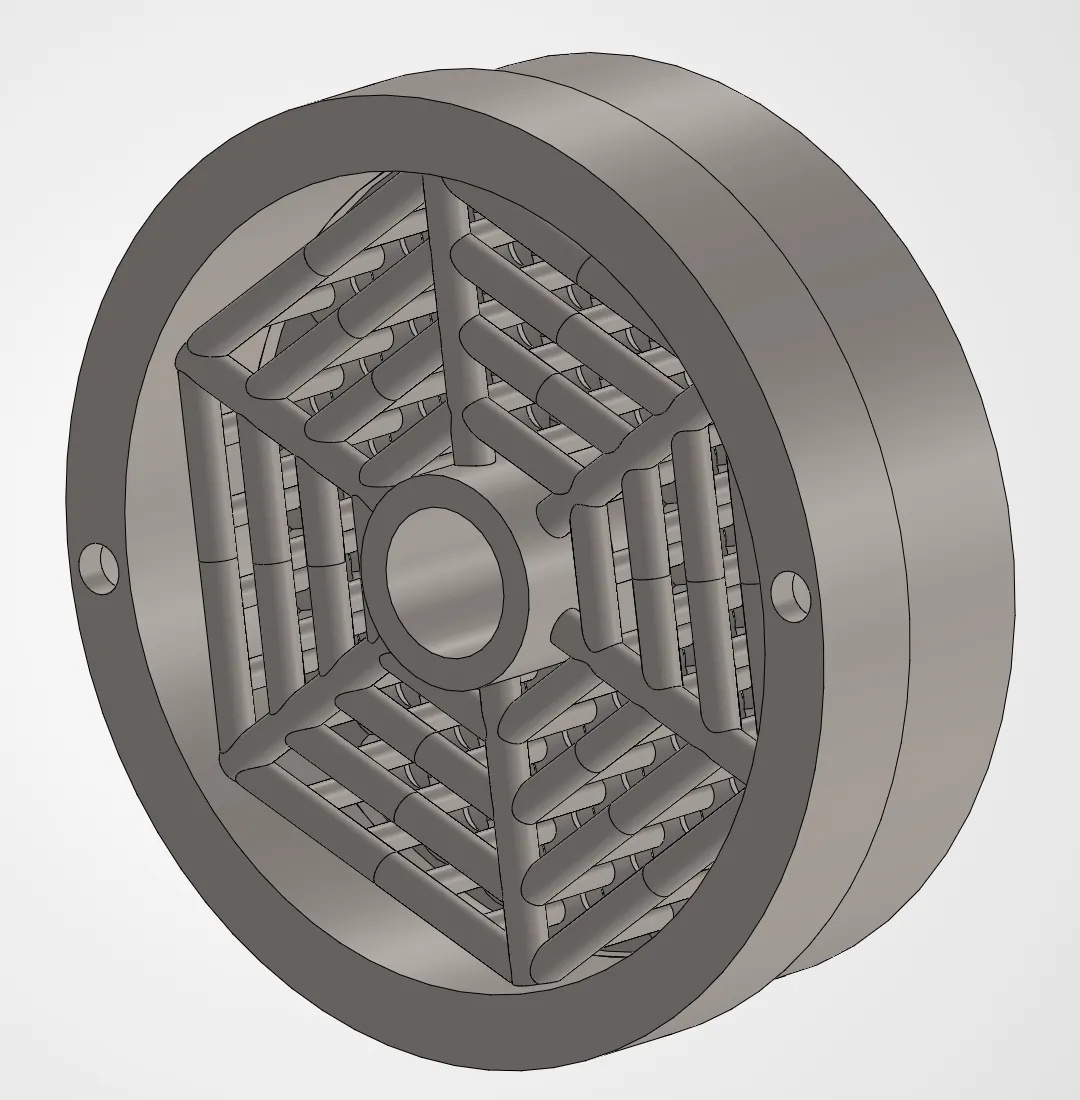
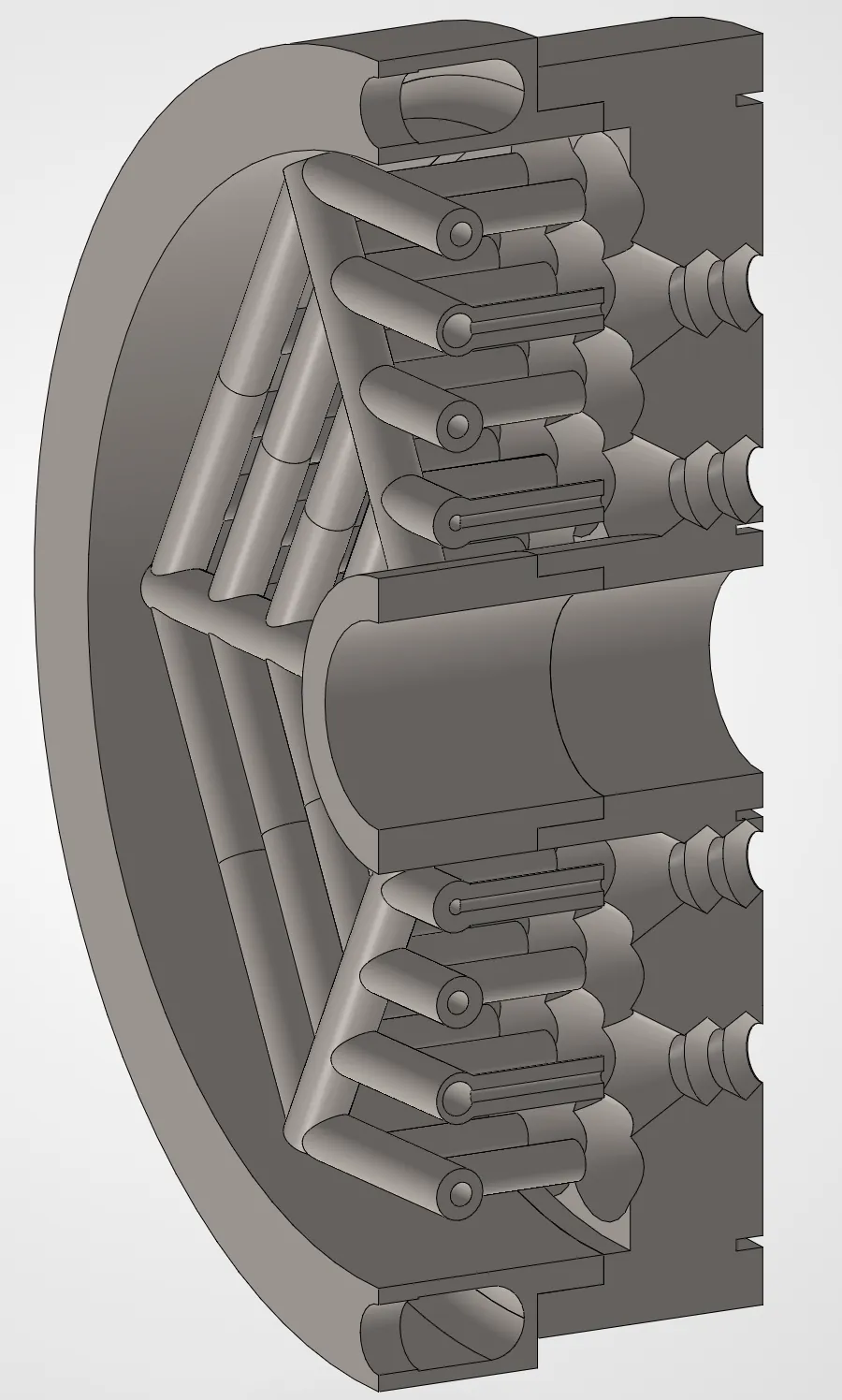
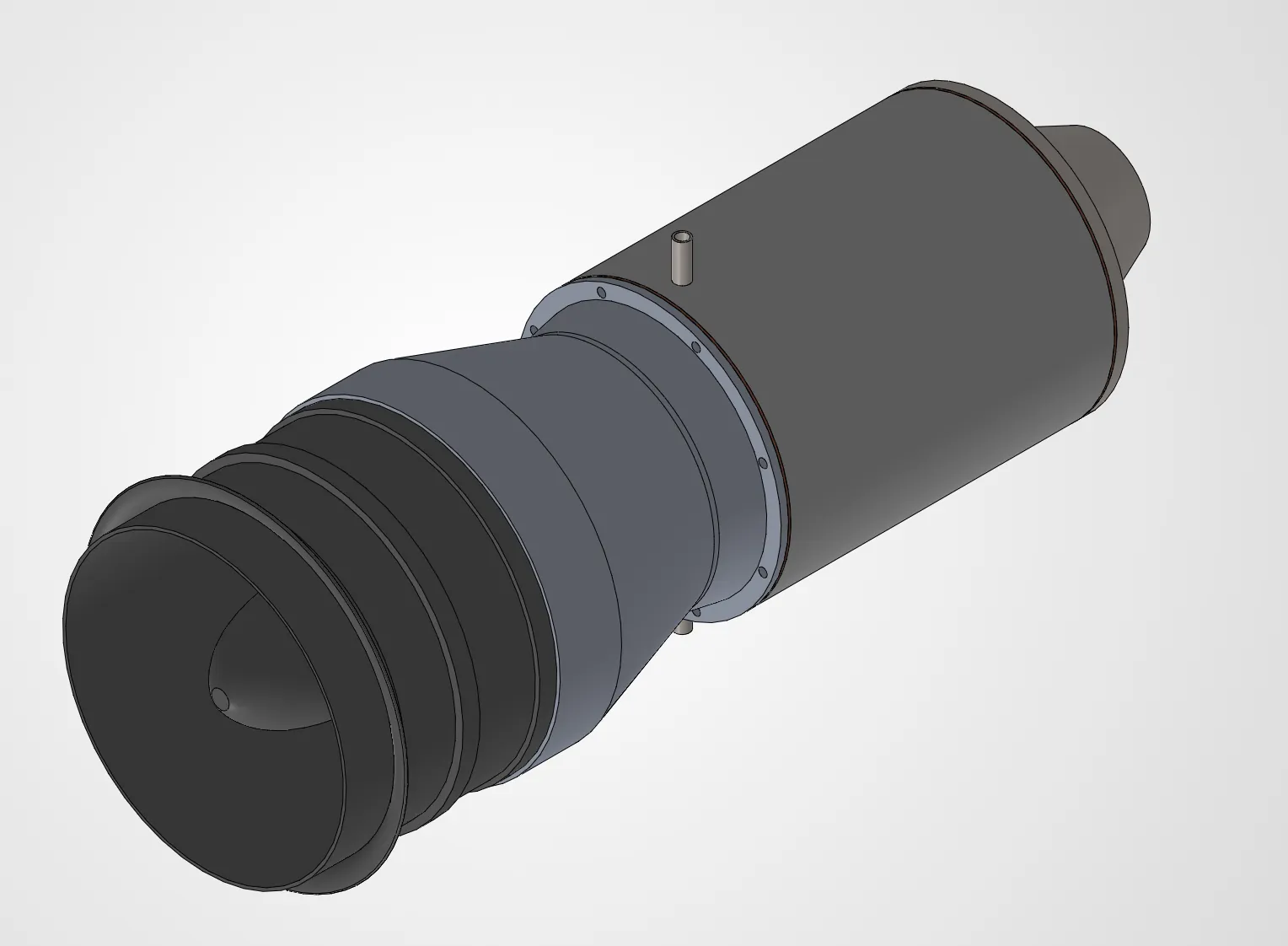
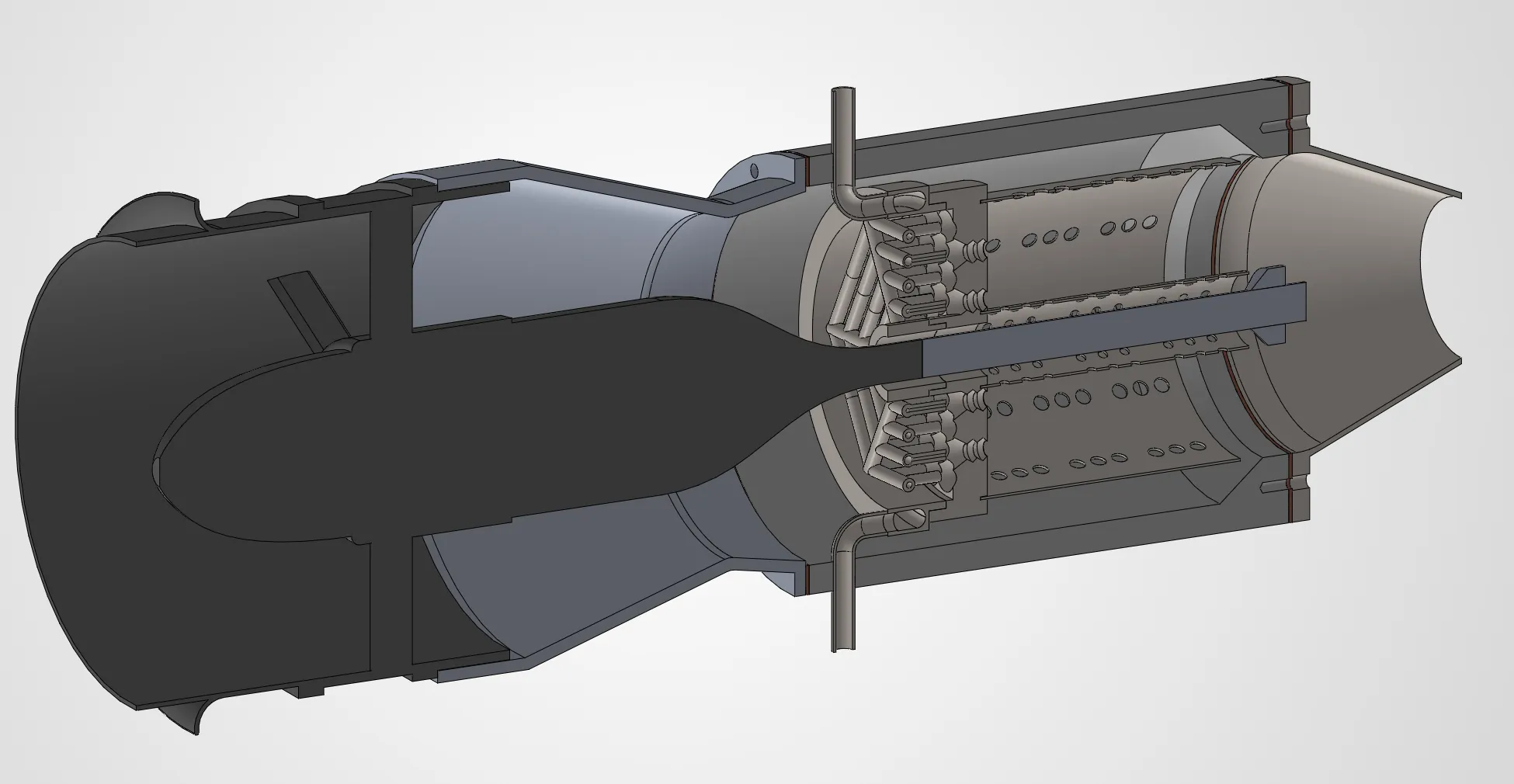
Penn Jet Propulsion is building a gaseous-hydrogen jet engine as a technology demonstrator. I did much of the research and CAD for its injector, which splits the fuel across 78 small injection points so it burns evenly.
- Team
- Penn Jet Propulsion
- Date
- Fall 2025 to present
- Role
- Engine team: injector research and CAD
- Tools
- SolidWorks
- Fuel
- Gaseous H₂
- Injection points
- 78on one micromix plate
- Program goal
- Stable combustiona technology demonstrator, not a thrust target
- My scope
- Research + CADmicromix injector assembly
Why hydrogen is hard
Hydrogen-fueled jet engines are rare. Hydrogen burns fast and hot, so a conventional injector that dumps fuel into one large flame zone tends to create hot spots and unstable combustion. Because the engine is a technology demonstrator, the team’s goal is simply to achieve reliable combustion, not to hit a thrust target.
The micromix approach
A micromix injector spreads the fuel across many tiny injection points so it mixes with air quickly and burns as many small, even flames instead of one big one. Our plate uses 78 injection points arranged in hexagonal rings around a central opening.
My role
- Researched micromix combustion and how it has been applied to hydrogen.
- Modeled much of the micromix assembly in SolidWorks, including the injector plate and its internal passages.
Also on the team
I also develop the nitrous oxide oxidizer system for the club’s hybrid rocket engine and run Ansys Fluent flow simulations of its nozzle.